
The Challenge of Realizing Environmentally Friendly Stationery
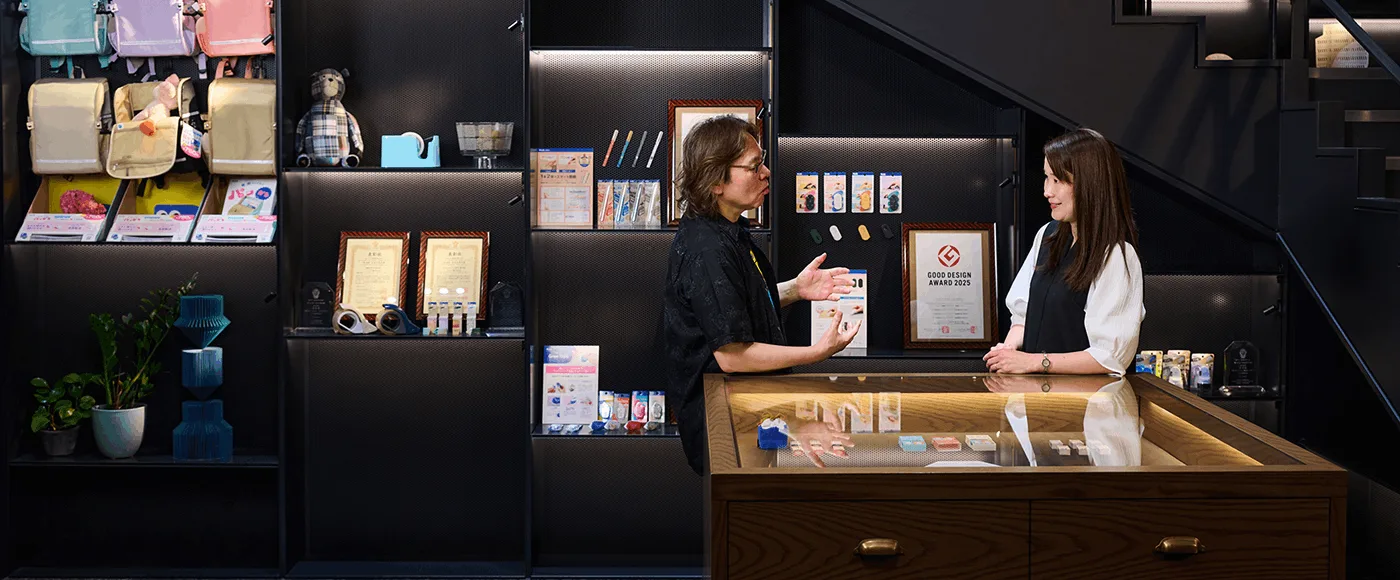
Envisioning the Future of the Stationery Industry for Over 20 Years
One of the PLUS Group's material priorities is “Developing goods, services and mechanisms to encourage the recycling of resources.” These efforts began with the enactment of Japan's Green Purchasing Act in 2000 and have continued to evolve ever since. We engaged in dialogue with our product development staff about ways to drive the evolution of the PLUS Group's environmental initiatives toward a brighter future for stationery.
Profiles

Syuichi Soeda
Acting General Manager, Sustainability Promotion Department, CSR Division, Stationery Company
Syuichi Soeda joined PLUS Corporation in 1988. Initially engaged in office product development and marketing, he has been involved in environmental initiatives since the passage of the Green Purchasing Act in 2000. He was instrumental in establishing the Environmental Marketing Department in 2009 and worked on various related initiatives, such as measures to ensure compliance with environmental laws and regulations, and the formulation of rules for the measurement and disclosure of our environmental footprint*. He has worked full‑time on sustainability initiatives since 2017. In addition to his activities within the PLUS Group, he also serves on both the Environmental Safety Committee and Sustainability Promotion Committee of the All Japan Stationery Association.
- *
Carbon footprint: Greenhouse gas emissions generated throughout the entire lifecycle of products and services, from raw material sourcing to waste disposal and recycling, expressed as CO2 equivalents

Mami Hasegawa
Marketing Division, Stationery Company
After joining the PLUS Group in 2005, Mami Hasegawa worked in business planning in the Smart Office Planning Department of JOINTEX Company. She subsequently left the company to pursue language studies in Shanghai, China, and later worked for a Japanese bank in Shanghai. She returned to PLUS Corporation in 2013 and was involved in‑store sales promotion planning and merchandising in JOINTEX Company's Market Development Department. She is currently working in product development for the Stationery Company.
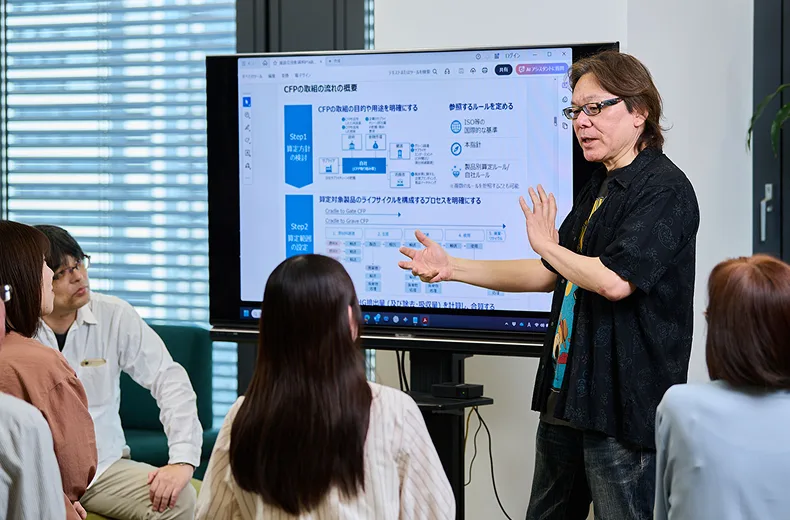
1. Defining Our Challenges Concern that products without environmental value would not survive in the market
The enactment of the Green Purchasing Act in 2000 was a major turning point. We had to take urgent action to ensure that our existing products would comply with the law by switching to recycled raw materials. The environment and sustainability have been the core focus of my work since around 2009. Hybrid cars were starting to gain traction back then, and consumers were becoming increasingly aware of the environment. There were clear signs of a shift in the social atmosphere, and we became acutely aware that products without environmental value would not survive in the market. I also realized that environmental initiatives aligned perfectly with our concept of “Social Optimality,” a phrase used frequently by our President at that time (now Chairman).
At this time, I was working for JOINTEX Company and was assigned to a planning unit for the office products direct marketing business. Government agencies and large corporations were stepping up their procurement of products that were compliant with the Green Purchasing Act, and we had started to place “Green Purchasing Act‑compliant” flags alongside products listings in our catalogs and website.
2. Trial and Error Overcoming the isolation and anxiety of new challenges thanks to a supportive corporate culture.
What initiatives were prioritized by the Stationery Company?
To comply with the Green Purchasing Act, PLUS Corporation began to use recycled plastics for the first time. By achieving the legally mandated usage ratios, we would be able to supply government agencies. However, our partner manufacturers were initially cautious because of concerns about product quality and the impact on their production processes. We engaged in persistent, open dialogue with them, and eventually we succeeded in earning the full understanding and acceptance of all of our partner manufacturers.
I subsequently took the initiative to establish the Environmental Marketing Department, where I was a team of one. I continued to push forward steadily with various efforts, such as advising other departments about new materials. I also began to calculate our greenhouse gas emissions. While the isolation was real, I was driven by a sharp sense of urgency, knowing that if we didn't start right then, we would simply run out of time. At the same time, I drew strength from a supportive corporate culture, including management's recognition of the importance of these challenges.
I didn't work in development operations at the same time as Mr. Soeda, but we were all aware of his efforts. Product development teams are constantly busy and find it difficult to maintain systematic access to sustainability information. In that environment, having someone who proactively researches accurate data and shares it in a clear, accessible way is incredibly reassuring. More recently, he has supported our work in a number of ways, including advice about eco‑friendly messaging in press releases for new products.
How has the stationery industry as whole approached these issues over the years?
The Sustainability Promotion Committee of the All Japan Stationery Association has drawn up industry rules for the calculation and disclosure of carbon footprints. I was able to apply my own past experience of calculating footprints and obtaining third‑party verification during the development of those rules. Today distributors and retailers are increasingly asking manufacturers to calculate their carbon footprints because of the need to reduce Scope 3 greenhouse gas emissions. We are holding cross‑company workshops and running industry‑wide training programs.

3. Current Priorities PLUS is leading the industry in balancing usability with environmental responsibility.
The stationery industry is a heavy user of plastics. How are you approaching the reduction of plastic use?
In 2026, Japan launched the Plastic Products Certification System. This system is designed to reduce plastic consumption and promote design specifications that facilitate material recycling by certifying products that meet national standards. It also contributes to the reduction of CO2 emissions.
Maintaining the same level of strength and usability as conventional products was a difficult challenge. However, PLUS Corporation's R&D Division had run numerous experiments and was already fully prepared to clear these hurdles. We therefore resolved to lead the industry by becoming the first stationery manufacturer to seek certification under this new system.
In February 2026, dedicated efforts by our product development teams culminated in the certification of our Lightweight Clear File and Lightweight Clear Holder. Since there is strong demand for clear files and holders in the public sector, any reduction in the amount of plastics used will have a significant impact in terms of reducing plastic consumption.
I worked on the development of the Keshipon personal‑information protection stamp. We created the product using recycled plastic made from discarded Honda automobile bumpers procured through Honda Motor Co., Ltd. There are many types of recycled plastics. Going forward, we will need to prioritize the use of post‑consumer materials* derived from used products. I see this initiative as a pioneering step that illustrates the new possibilities emerging from cross‑industry collaboration.
- *
Post‑consumer materials: Materials made by reusing or recycling used products recovered from consumers.
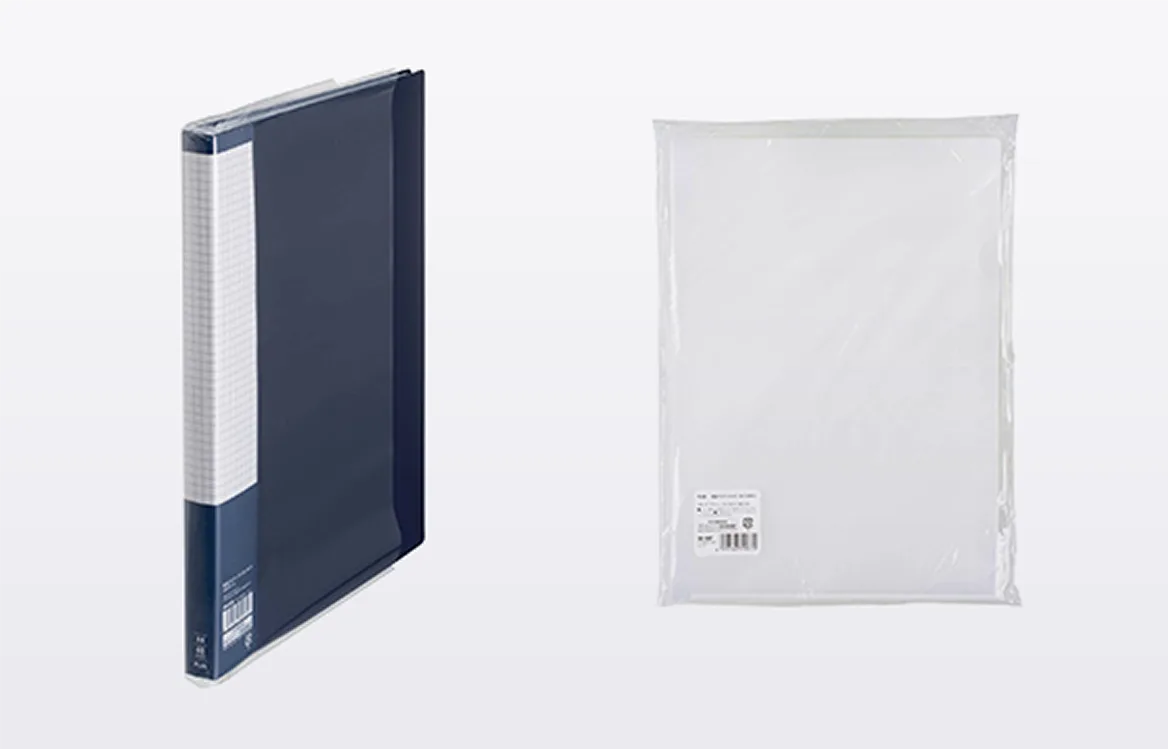
The PLUS Group's Lightweight Clear File (left) and Lightweight Clear Holder (right) were both made using certified plastics.
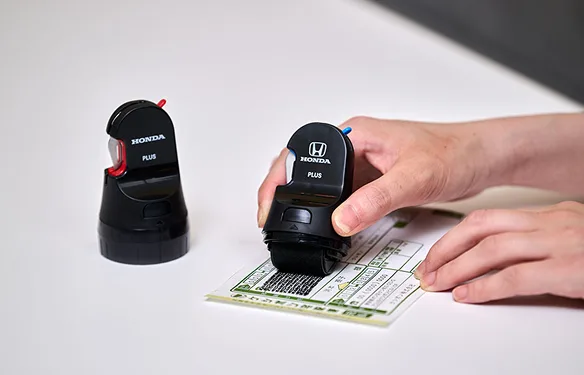
The Roller Keshipon Box Opener (refillable) is a limited‑edition Honda‑licensed product. Approximately 30% of the main body components of this product are made from recycled plastic derived from discarded Honda car bumpers.
4. The Path Ahead We aim to switch our entire supply chain to sustainable products.
What new challenges would you like to tackle going forward?
Product development and sustainability are now inextricably linked. For example, we have already switched to paper box packaging for most of our Keshipon products destined for overseas markets. We also increasing the proportion of paper packaging used for other products, depending on the characteristics of each product. I feel that paper packaging not only benefits the environment but also gives users the impression of modern, on‑trend products. Ultimately, our goal is to build a future where the products that customers naturally choose also happen to be environmentally friendly.
The environment is just one aspect of sustainability. We also need to take action from a broader perspective that encompasses other issues, such as human rights and safety. We are currently conducting a survey on sustainable procurement. Based on the results of this survey, which we aim to complete by the end of 2026, we intend to pursue sustainability across our entire supply chain.
What first inspired you to pursue environmental initiatives?