
Social Optimality Milestones
The History of the PLUS Group's Social Optimality
The PLUS Group stresses the importance of “Four Way Satisfaction,” our management policy that aims to satisfy customers, corporate partners, employees, and society all at the same time.
Our stance of aiming for Social Optimality, harmonizing the economy, society and the environment, is perfectly in line with the SDGs. Going forward, we will continue striving to maximize customer satisfaction and create markets with our free‑wheeling ideas.
The Early Years
Chiyoda Stationery Co., Ltd. was founded through the merger of Imaizumi Shoten and Suzuki Shoten. Both presidents retained their position, and Chiyoda Stationery was a hot topic of the day as “an unusual company that has two presidents.” The brand name PLUS was adopted as the company name in 1959. It incorporated the aspirations that the two companies would become one and generate synergy, and that the company would be a plus to society.
The History of the PLUS Group
| 1948 |
|
|---|---|
| 1959 |
|
| 1967 |
|
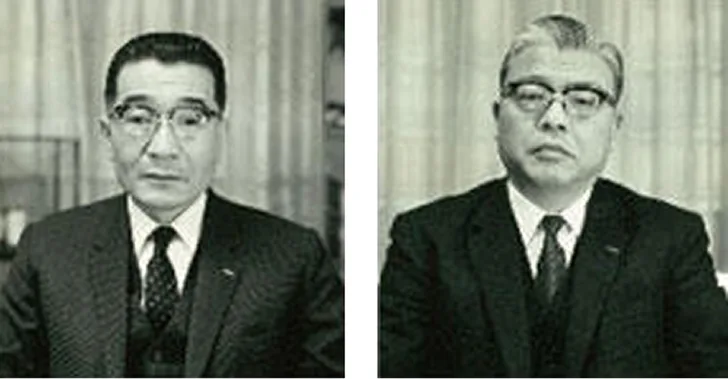
Left: Shinjiro Imaizumi Right: Hohei Suzuki
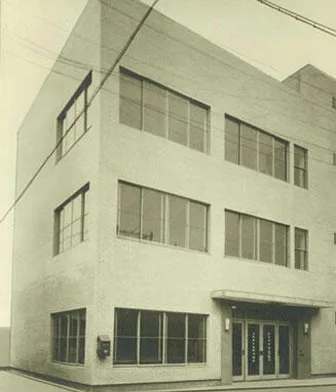
The original company building (Kanda‑Iwamotochō, Chiyoda‑ku Tokyo)
A Period of Growth
The employee dress code was abolished in 1982, an unusual step for the time. The following year, Yoshihisa Imaizumi (our current chairman) became president at the young age of 40. A culture of speaking freely became established, and creativity that galvanized working spaces led to the development of a wide range of office businesses. During all this, we grew from a manufacturing wholesaler to a “manufacturer that creates the best from scratch.” We completed our industrial complex PLUSLAND and our plants in Vietnam, and moved forward with manufacturing that coexists in harmony with its local area and the environment.
The History of the PLUS Group
| 1982 |
|
|---|---|
| 1984 |
|
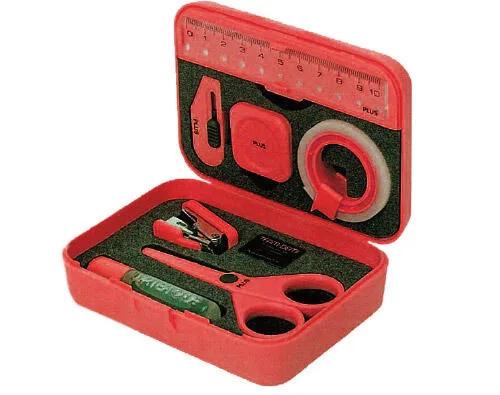
Launch of our TEAM DEMI personal stationery set (1984)
A Period of Great Change
Striving to “prioritize customer satisfaction while also striving to satisfy our company,” we created a business model based on our concept of Social Optimality and started the ASKUL business in 1993 to bring a breath of fresh air to the office products logistics industry. The trademark we had used ever since our founding was revamped in 2007. We retained blue, a color overflowing with vitality, as its key color tone, and created a simple and fresh design with a contemporary feel by using a highly visible but casual typeface.
The History of the PLUS Group
| 1991 |
|
|---|---|
| 1996 |
|
| 1997 |
|
| 2001 |
|
| 2006 |
|
| 2007 |
|

Left: 1972 Our “Wave” logo
Center: 1988 Revised to just the PLUS letters
Right: 2007 Revamped for our Brand Strengthening Year One
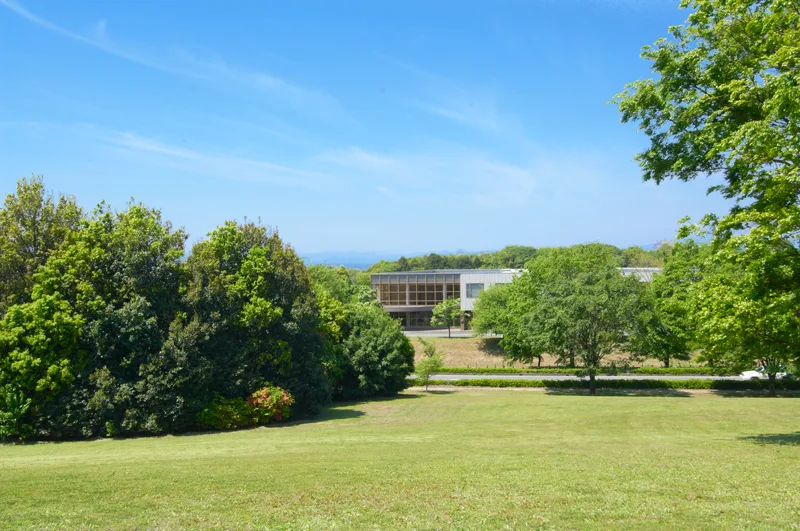
PLUSLAND
A Period of Expansion
We established a new corporate philosophy based on the corporate climate, culture, and philosophy handed down since our founding. We also clearly stated our vision, values and guidelines for actions as PLUS no kokoro.
As values become increasingly diversified and globalization proceeds apace, we are expanding our business foundation with an eye toward the next generation by adding companies with diverse strengths to the PLUS Group, in order to further enhance our presence in each business sector.
We are also promoting cross-functional projects to generate synergies across the group and bring new ideas to life.
In particular, our Global Stationery Company established in 2024 is fulfilling its role of supervising our businesses inside and outside Japan and further accelerating value creation across the globe.
Alongside this business expansion, we are also advancing operational efficiency through the integration of core systems at each company and the utilization of our generative AI, “Minna no DX Chat.”
We are strengthening initiatives based on our sustainability policies, such as calculating and reducing CO2 emissions across the group, in order to address environmental challenges.
To continue delivering “Unique Values ‑ Higher Satisfaction.” the PLUS Group will continue working to realize “Social Optimality” and a sustainable future by sharing our corporate philosophy and demonstrating the action and creativity of each employee as one unified Group.
The History of the PLUS Group
| 2015 |
|
|---|---|
| 2018 |
|
| 2022 |
|
| 2024 |
|
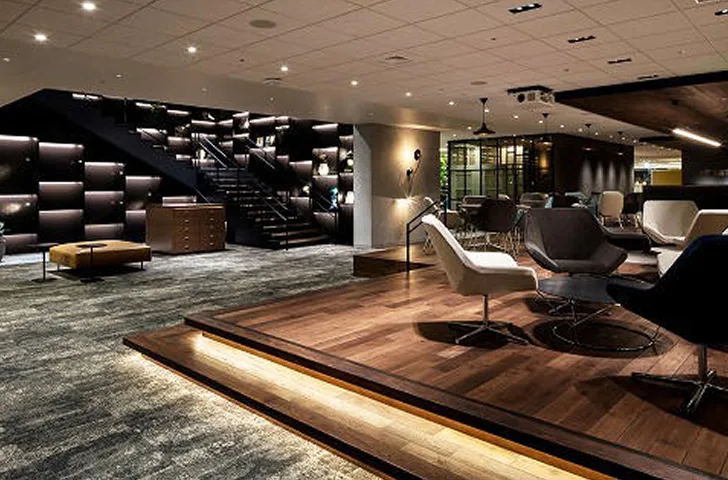
An office where DEAI generates IDEA (Headquarters, the Toranomon Office)
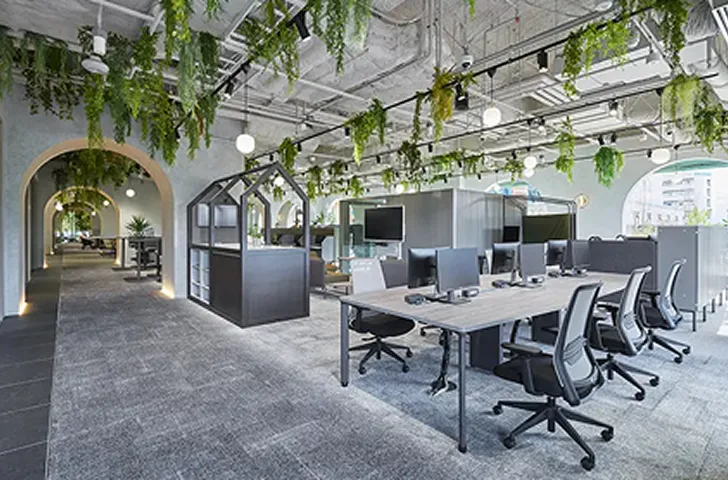
PLUS DESIGN CROSS (Furniture Company Ebisu Office)
The PLUS Group business domain expands as we strive for Social Optimality
Stationery business field
We aim to be the top stationery manufacturing group in the world with products that enrich people's daily lives and make work more fun.
- Stationery business
- Vision business
Furniture business field
What should offices be like in an era of diversifying work styles? As a platform disseminating corporate culture, we improve offices and support our customers in the management of their business.
- Office business
- Hospitality business
- EC business
Distribution business field
By providing goods, services, and knowledge that meet contemporary needs, we support the creation of a better working environment and business improvement for corporate customers. We are also working on the provision of new services to revitalize stationery and office supplies stores.
- JOINTEX Company (for corporate customers)
- Retail support business (for the personal use market)
Logistics / Service business field
PLUS Logistics Group collaborates to leverage its various strengths and provide optimal logistic solutions and a variety of facility engineering services, not only to the PLUS Group, but also to customers in a wide range of industries and business fields.
Other (Consulting etc.)
-
Institute of Educational Enviroment
We propose total solutions that cover everything from the conception and planning of “places to learn” such as schools, lifelong learning facilities, and welfare facilities, to intangibles such as educational methods and management systems, and tangibles such as architecture, furniture, and equipment. -
Future Creation & Development Center LLC.
We are engaged in product planning and development in new business fields, leveraging the technologies and know‑how of ASTRUM CO., LTD. and PLUS Corporation.